
Every Child Belongs
Catholic Bishops Present Supreme Court Withy a Moral Case for Birthright Citizenship

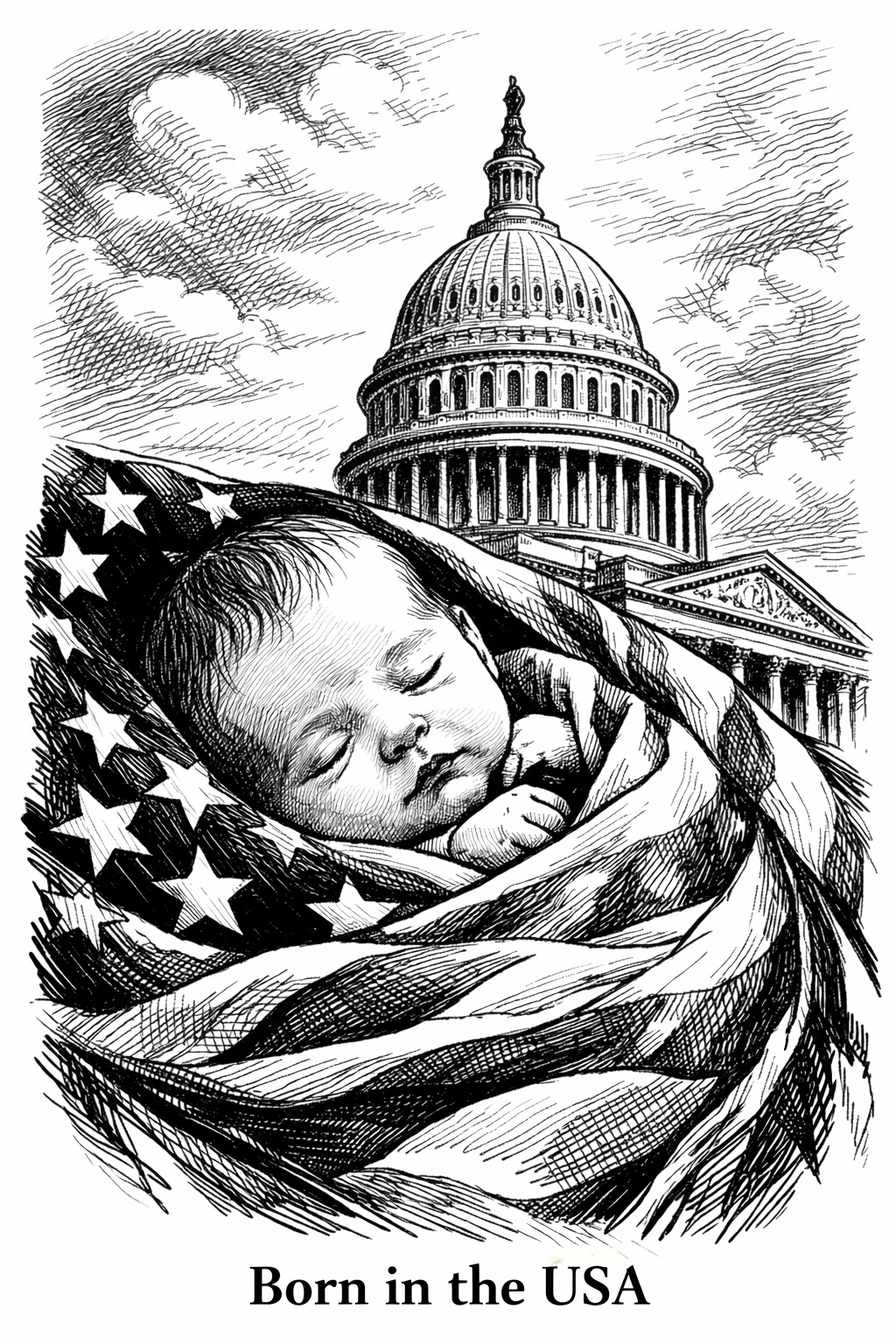
Last week, the United States Conference of Catholic Bishops (USCCB), joined by the Catholic Legal Immigration Network, Inc., filed a brief with the U.S. Supreme Court defending the constitutional guarantee under the Fourteenth Amendment that anyone born on U.S. soil is a citizen of the United States.
What makes the brief notable is not just its legal reasoning. The bishops deliberately spoke in moral language.
“Children do nothing wrong by being born in the United States,” they say in their brief.
“…Depriving an innocent child of his citizenship based upon his parents’ immigration status would be an especially outrageous punishment — one that this Court has rejected as punishment even for people who have been proven guilty.”
Thus, the bishops framed the case not merely as a constitutional dispute, but as a question of human dignity and justice. For that reason, all Americans — regardless of religious or political belief — should pay close attention to their ethical argument.
At the heart of their case is that simple moral point that newborn children have done nothing wrong by being born in the United States because a child does not choose where to be born. A child does not choose his or her parents. Birth is not an act of lawbreaking. It is simply life beginning.
“This case is not solely a question about citizenship status or the Fourteenth Amendment,” the bishops write. “It is a question of whether the law will affirm or deny the equal worth of those born within our common community—whether the law will protect the human dignity of all God’s children.”
Stripped of religious language, the point is clear: will our laws recognize the equal value of every child born here?
They state plainly that “ending birthright citizenship denies the innate dignity and freedom of the person.” Dignity means that every human being has worth simply because he or she exists. It is not something earned. It is not something granted by a government. It is something the law should recognize and protect.
The bishops also warn against punishing children for circumstances they did not create. That statement speaks beyond religion. It reflects a core American belief in fairness and personal responsibility. We do not punish children for the actions of adults. Justice requires that consequences fall on those who made the choices.
The bishops urge the Court to “protect God-given human dignity” by holding that the executive order seeking to end birthright citizenship is unconstitutional.
From a moral standpoint, the constitutional guarantee of the Fourteenth Amendment is more than text adopted after the Civil War. It is a promise that no child born here will be placed into a lesser legal category because of ancestry or status. It was written to prevent the creation of second-class people.
Citizenship shapes a life — education, work, stability, belonging. When we say that a child born here is a citizen, we are saying: you are one of us. You are not conditional. You are not temporary. You belong.
The bishops’ brief ultimately challenges Americans to consider not only what the law permits, but what justice requires. How we treat newborn children reveals who we are as a nation.
That is why their ethical argument deserves careful attention from every American, regardless of faith or party. It asks a simple but profound question: Will our laws reflect the equal dignity of every child born on our soil? Our answer will define not just our policy, but our character.